

Oct 28, 2026
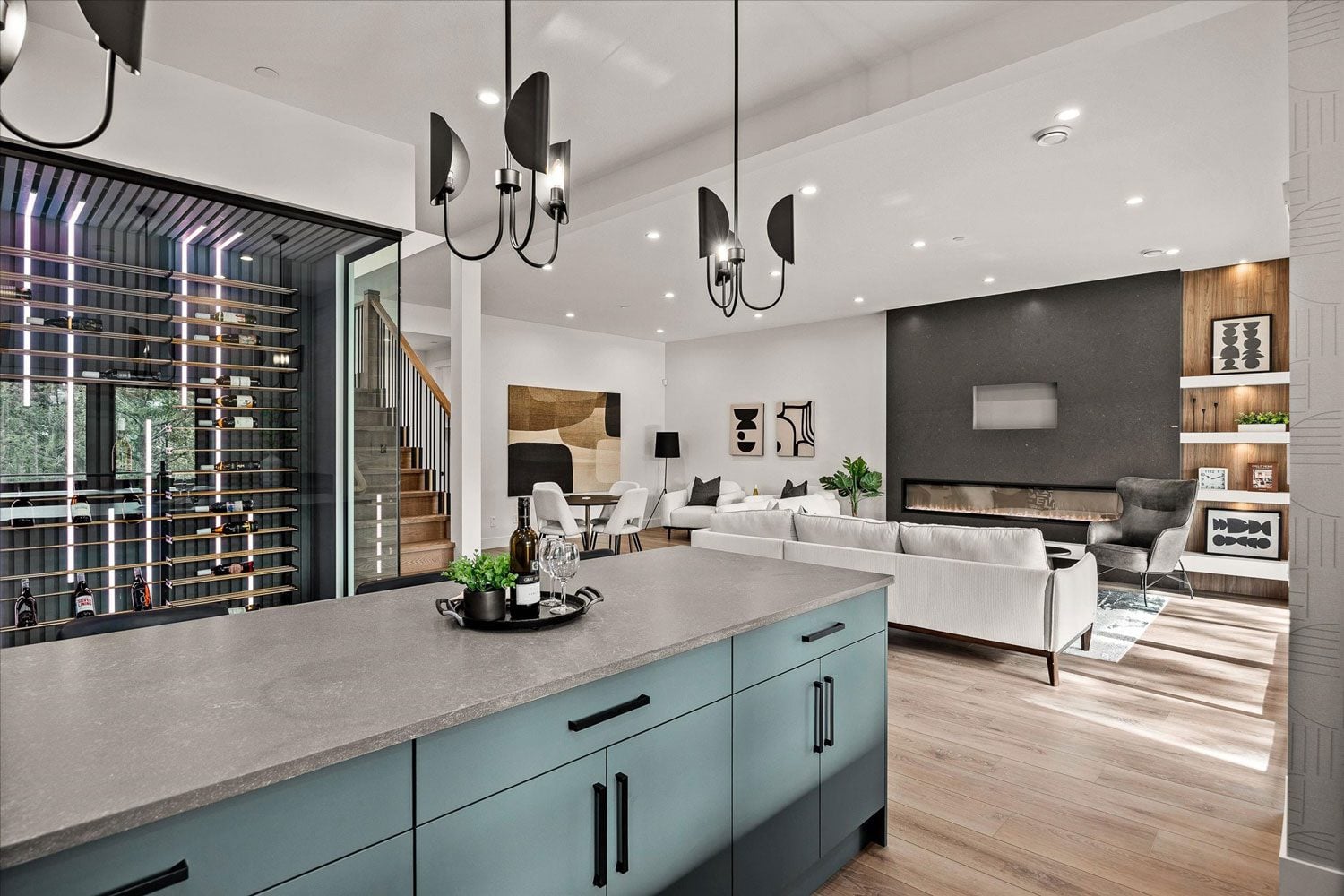
We spend most of our waking hours at home in the kitchen. We cook there, unpack groceries there, and inevitably pour a glass while dinner comes together. So it makes little sense to stash wine down a dark flight of basement stairs when you can keep it within arm’s reach of the cutting board.
Modern metal racking and clean refrigeration systems have changed how kitchens are laid out. Today, storing dozens—or even hundreds—of bottles near the prep island doesn't mean sacrificing pantry space or crowding your cookware.
Here is how three different homes put wine front and center, from a clever pantry retrofit to a full glass-enclosed cellar.
The Small Space: The Hidden Pantry Wine Wall
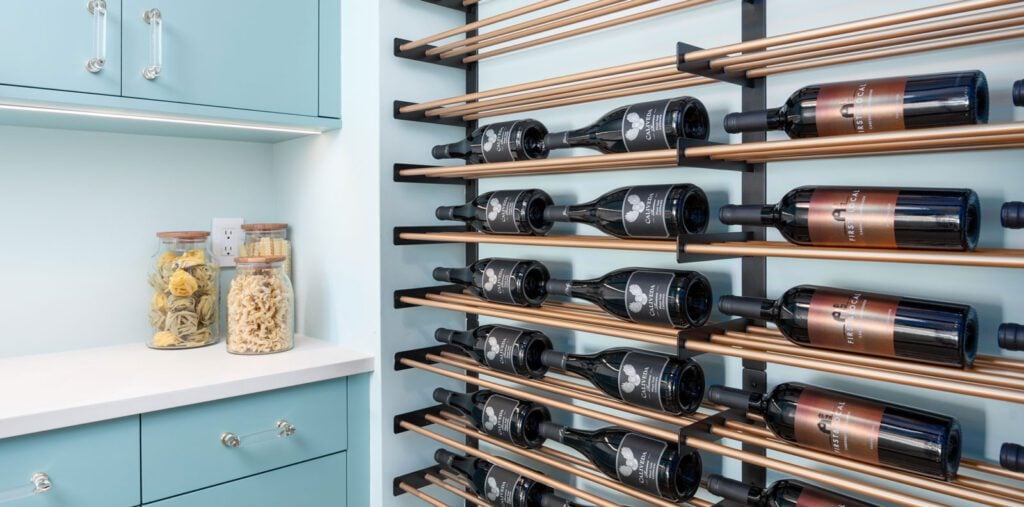
Almost every major renovation starts by solving an awkward spot on the floor plan—a dead corner, an odd hallway, or wasted space between rooms. For the 2026 New American Remodel showhome, architect Phil Kean looked at an empty transition corridor between the kitchen and the garage and turned it into a concealed walk-in pantry.
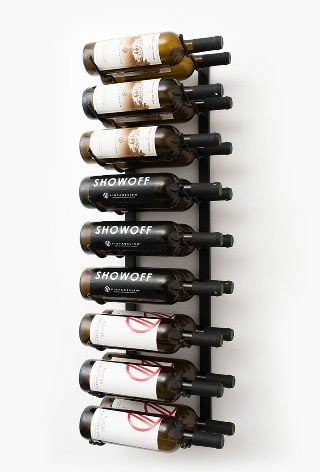
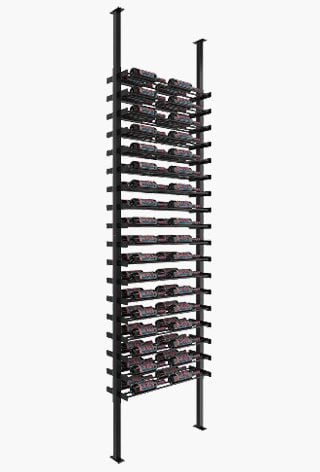
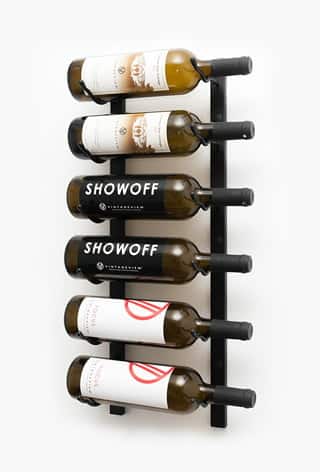
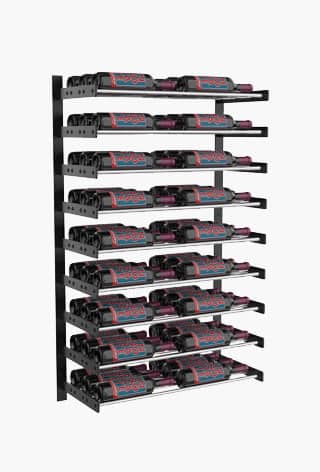
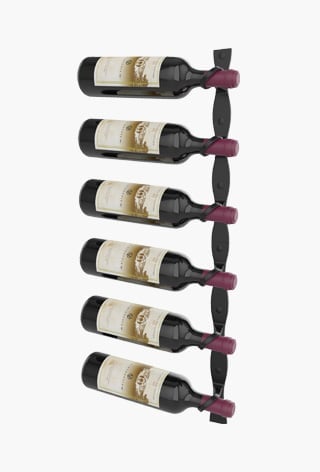
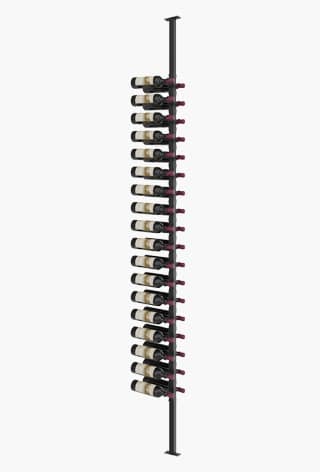
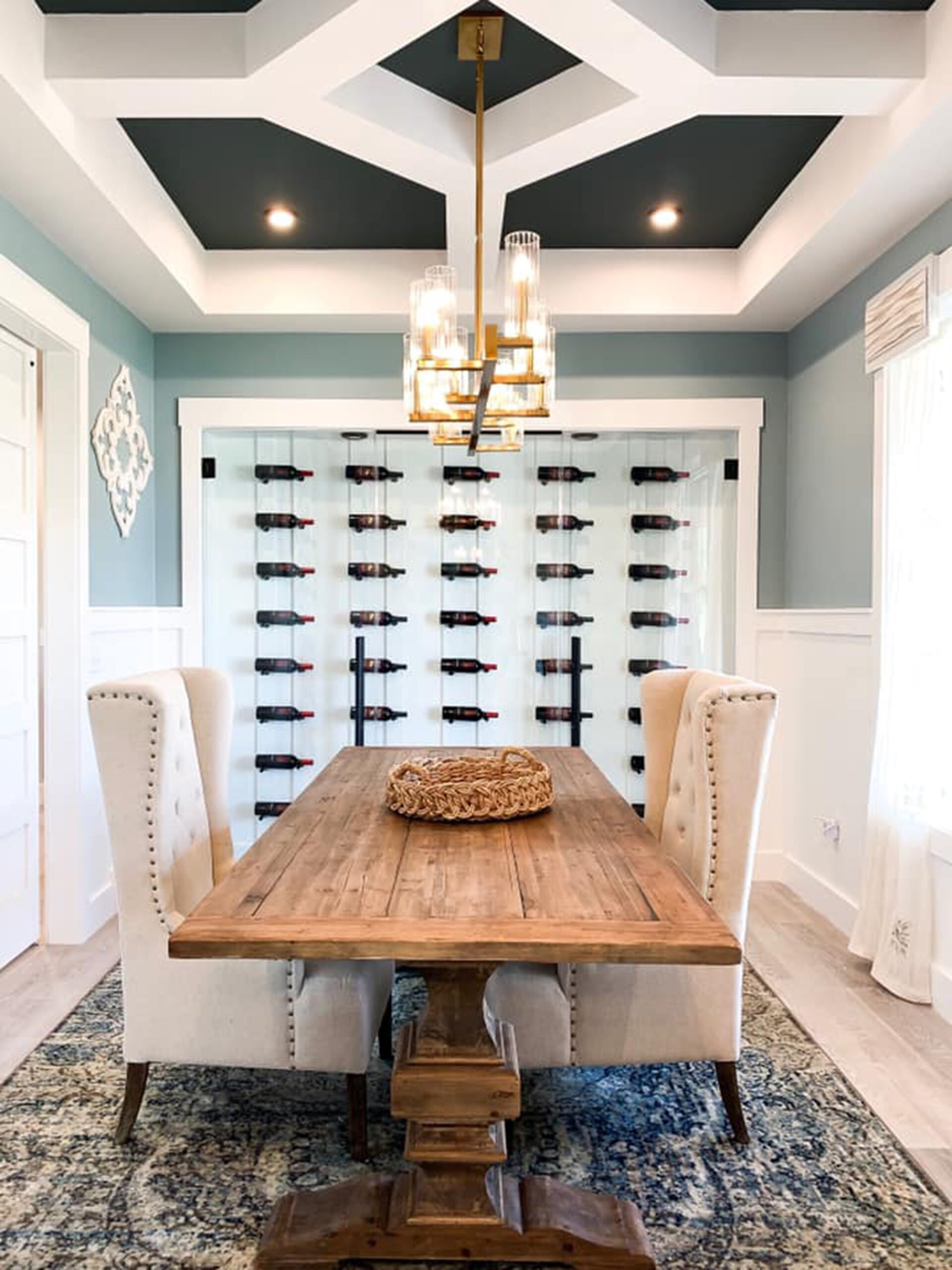
Behind a set of custom cabinet doors, Kean built a 120-bottle display wall using VintageView’s Evolution Wine Wall system. The layout uses just four vertical components mounted directly to the wall, floating bottles label-forward so you can read them at a glance. The steel-rod design holds standard 750ml bottles, wide Champagne bases, and 1.5-liter magnums on the same wall. By keeping the bottles flush against the vertical surface, the pantry retains plenty of walkway room while adding substantial bottle capacity.
- Project: The New American Remodel 2026 Showhome (Winter Park, Florida)
- Builder & Designer: Phil Kean Design Group
- Racking System: VintageView Evolution Wine Wall
- Total Capacity: 120 bottles
The Grand Statement: The Kitchen Cellar
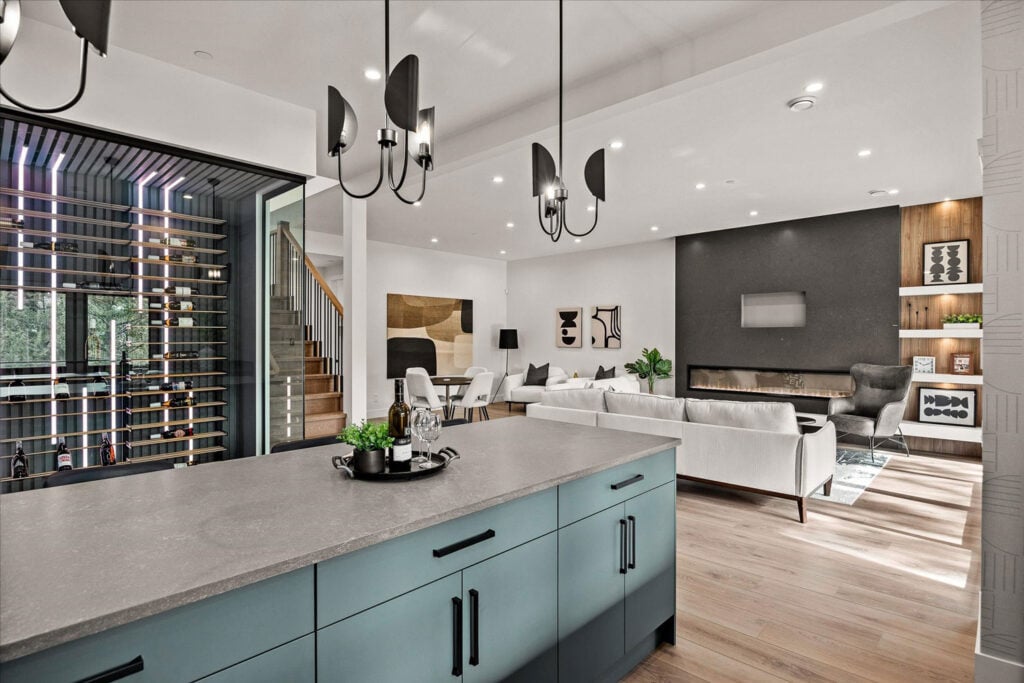
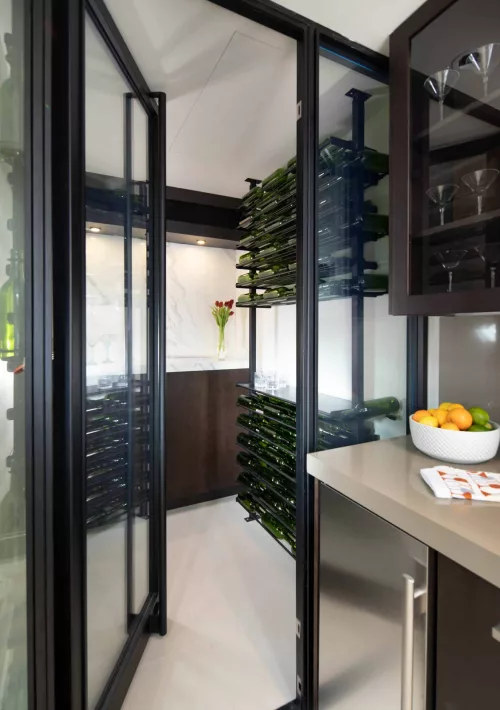
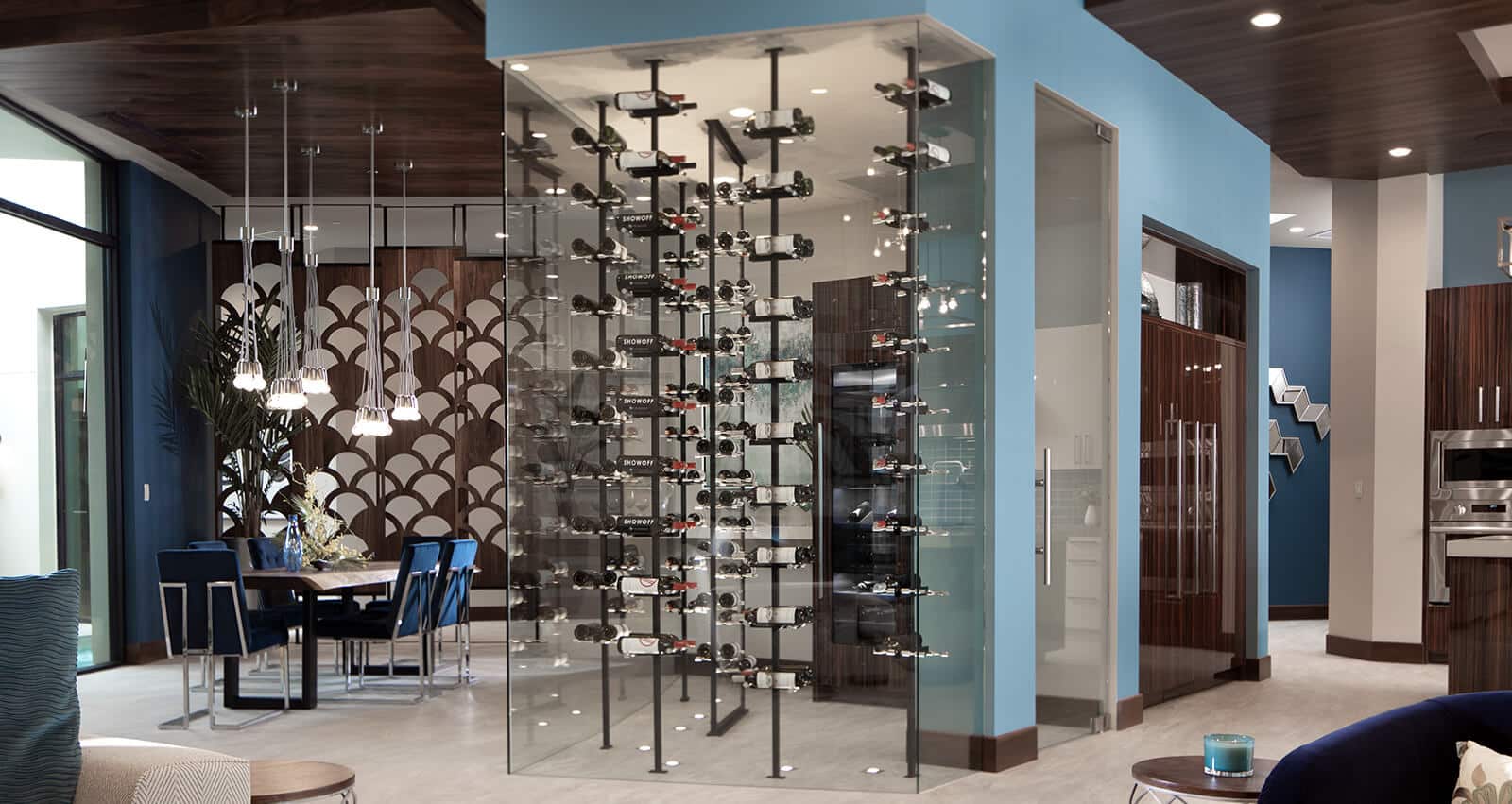
In British Columbia’s Okanagan Valley, wine is a way of life, and this custom build treats storage as a main focal point of the room. Rather than tucking the cellar away in the basement, Carrington Homes built a 216-bottle room right along the kitchen perimeter.
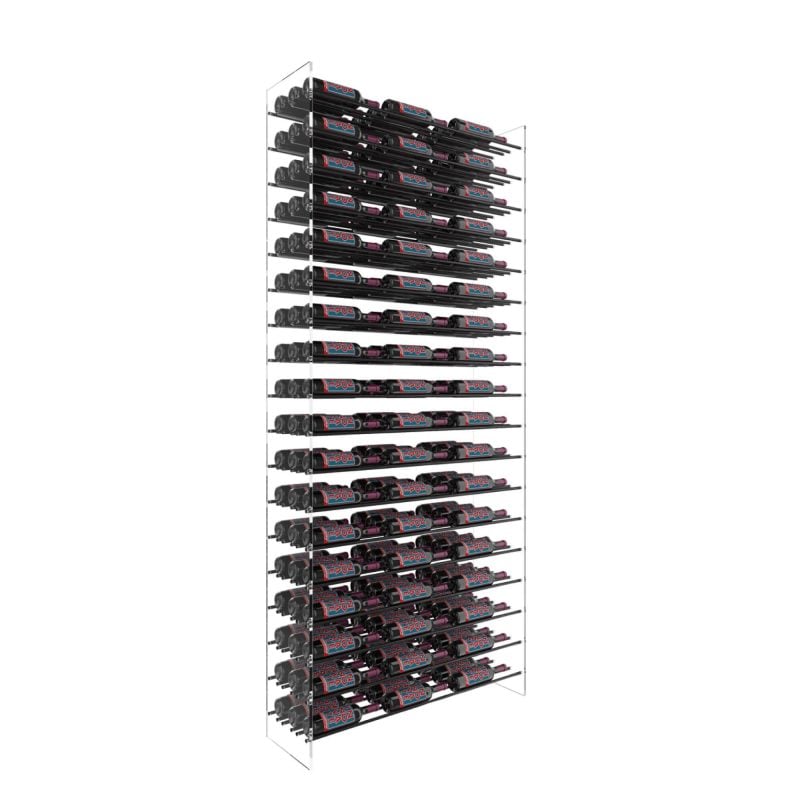
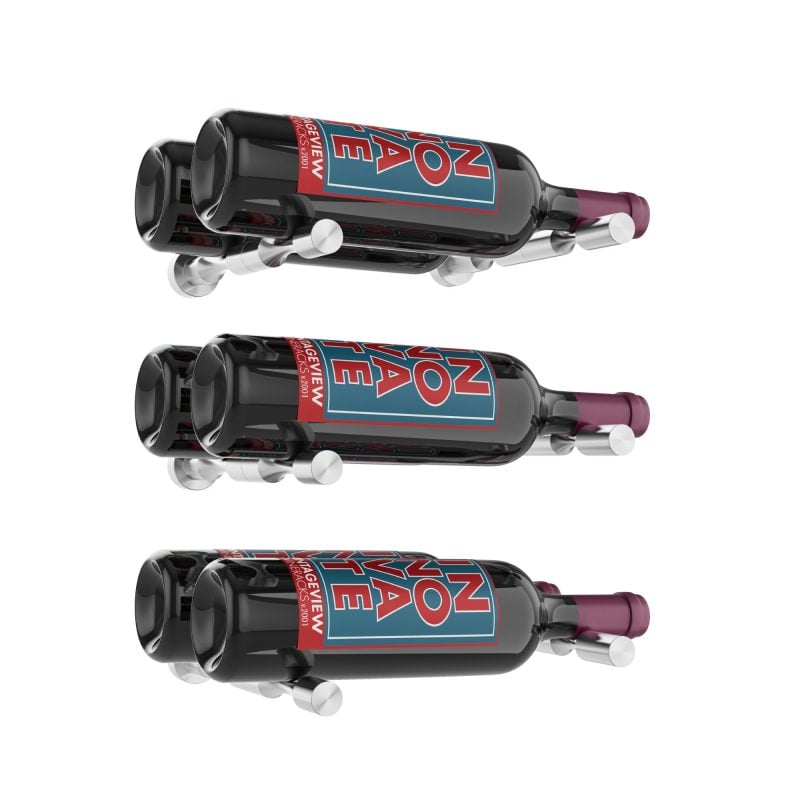
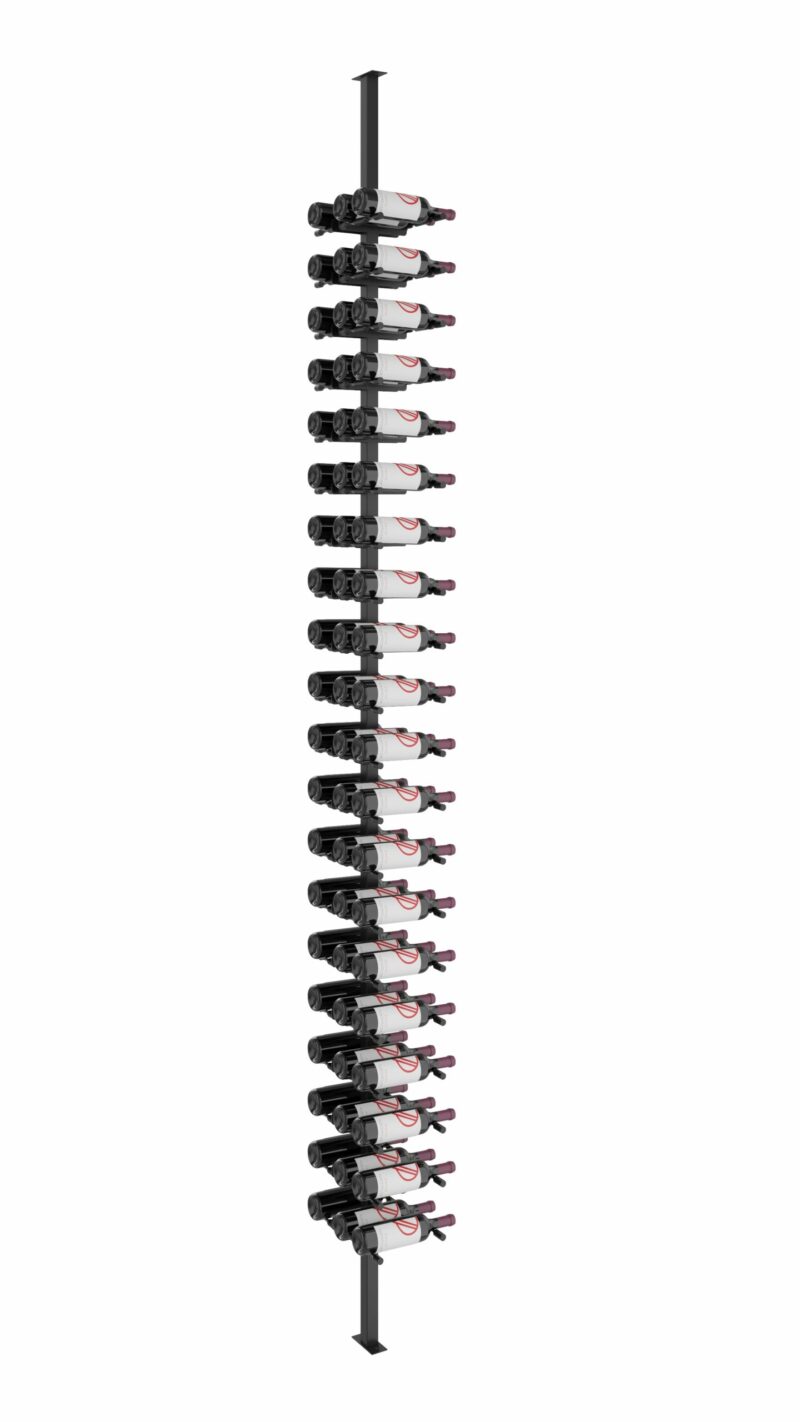
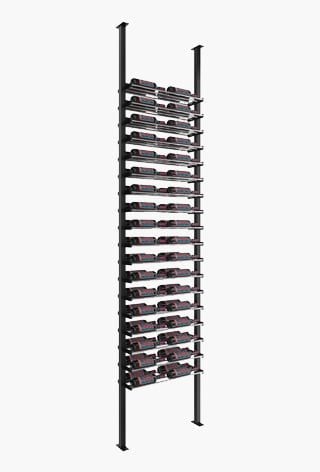
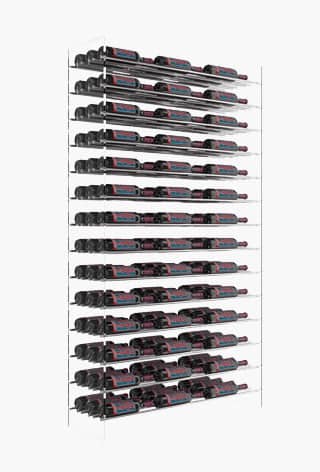
Floor-to-ceiling frameless glass keeps sightlines open across the kitchen island and dining table. Inside, the Evolution Low Profile racking pairs Matte Black mounting brackets with warm Golden Bronze rods, echoing the room's brass cabinet hardware and custom backsplash tile. A horizontal service shelf runs across the center row, giving the cook a designated spot to set down glasses, open bottles, and let older reds breathe before dinner.
- Project: Lakeside Kitchen (Kelowna, British Columbia)
- Builder: Carrington Homes
- Racking System: VintageView Evolution Low Profile
- Finish: Golden Bronze rods with Matte Black brackets
- Total Capacity: 216 bottles
The Turnkey Solution: A Standalone Wine Refrigerator
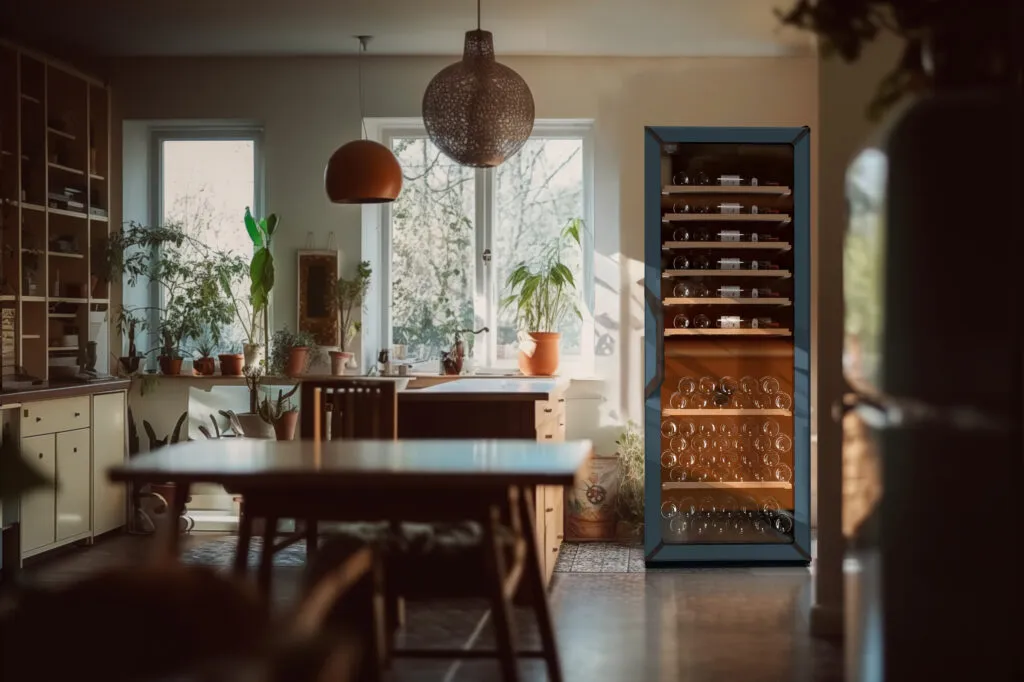
Not every kitchen remodel allows for tearing open walls, running cooling lines, or building an insulated glass box. For serious collectors who want steady temperature control without major demolition, a dedicated wine refrigerator is the cleanest answer.
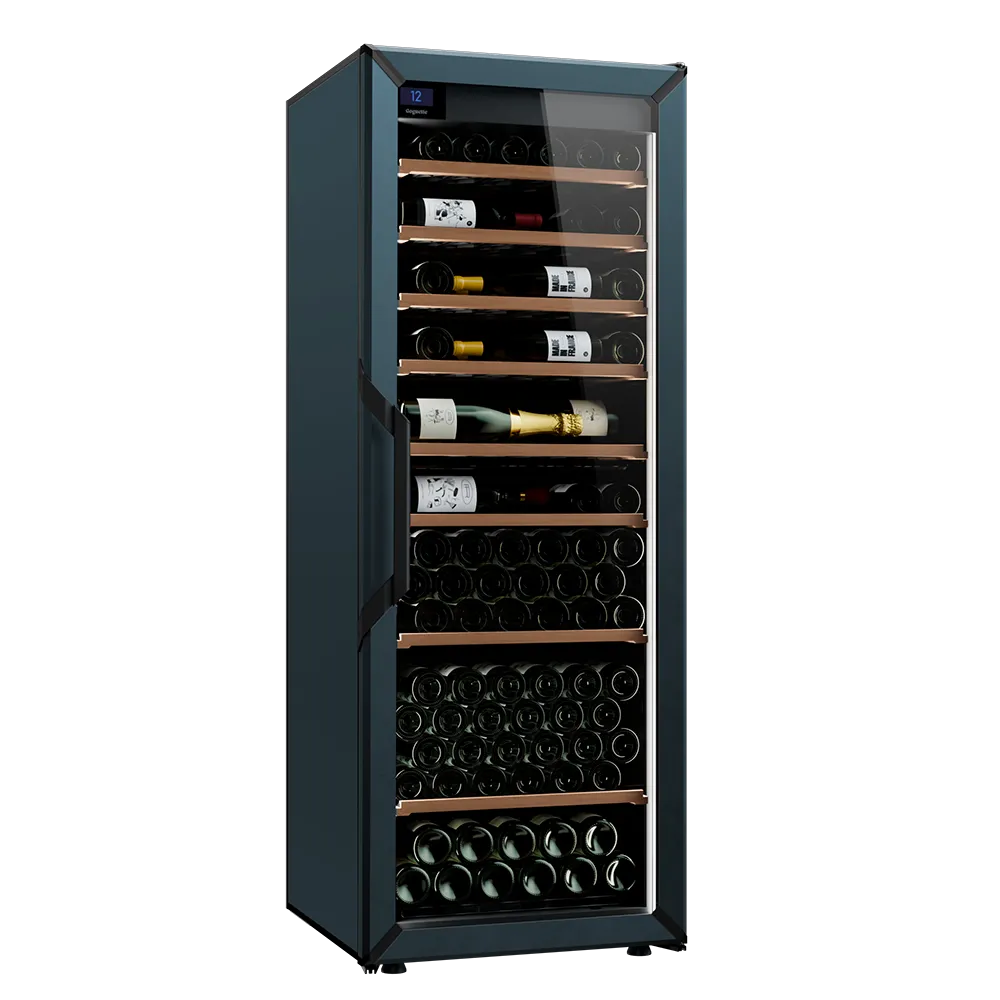
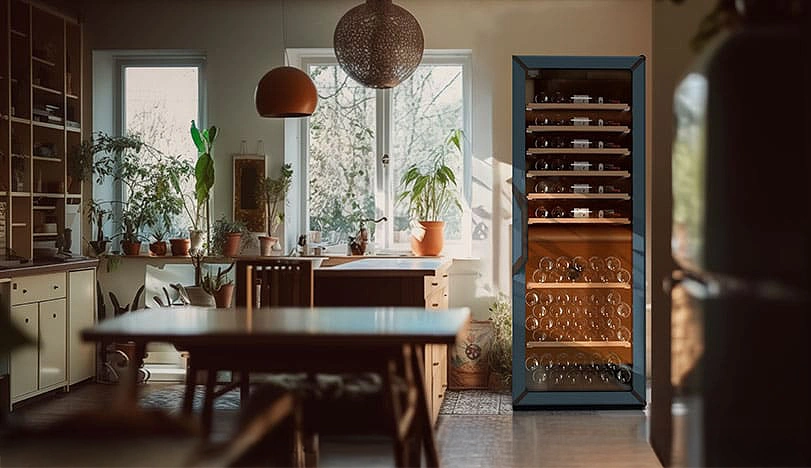
In this modern farmhouse kitchen, a tall Goguette refrigerator sits flush with the surrounding cabinetry. Built in France by EuroCave, the cabinet holds over 150 bottles under consistent humidity and temperature. The matte white finish and simple profile keep it from looking like a piece of bulky restaurant equipment, while the UV-treated glass door and amber interior lighting shield delicate vintages from daytime kitchen sunlight.
- Appliance: Goguette Wine Refrigerator by EuroCave (distributed in the U.S. by VintageView)
- Space: Modern Farmhouse Kitchen
- Finish: Crisp White with Frameless Glass Door
- Total Capacity: 150+ bottles
Kitchen Wine Storage: Quick Rules of Thumb
- Keep away from heat: Never place wine racks directly next to or above ovens, ranges, or dishwashers. The heat cycling will ruin corks and cook the wine.
- Filter the light: UV light breaks down wine over time. If you use a glass enclosure or refrigerator, make sure the glass is UV-rated, or place open racks on an interior wall away from windows.
- Store label-forward: Keeping bottles horizontal with labels visible means you don't have to disturb the wine or shake up sediment just to find what you want to open.